


Referral systems for working businesses
How to Build a Referral System That Works Like a Charm


Make every referral feel obvious, fair, and worth repeating.
Picture the normal version first. A partner recommends your business in a group chat, someone buys, three people later ask who deserves credit, and suddenly the "simple referral program" is a spreadsheet, two screenshots, and one tired founder doing accounting at midnight.
The best referral programs do not feel like tracking systems. They feel like a recommendation from someone trusted, followed by a clean purchase and a clear commercial promise.
Confuse any one of the three parties and the program slowly collapses into manual messages, payout disputes, and spreadsheets.
What the public experience should feel like
A referral should begin as a trusted introduction, not as a campaign trick. The link, QR code, or shared phrase should feel like a natural recommendation from someone who knows the customer, not a tracking device that suddenly changes the relationship.
The buying path should then be clean. Send the customer to the right offer, apply any benefit honestly, and avoid making them paste codes or decode partner rules. If there is a discount, show it plainly. If there is no discount, do not pretend there is one.
This is the first trust test. The customer gets clarity, the partner gets credit, and the host gets control. Everything else in the program exists to keep that promise true after the purchase, when memory gets fuzzy and everyone suddenly becomes a historian.

The middleman is the trust layer.
The referral partner is not just someone with a link. They are lending the host their reputation, and that is a loan, not a gift.
The way you repay a reputational loan is not only with money. It is with proof that the referral counted, progress toward a better reward, and recognition that the work was seen. Strip those away and you spend a partner's credibility without ever settling the debt.
The partner toolkit should be simple: a shareable link, a QR asset, a short version of the offer language, and a dashboard that shows progress, commission status, tier, and payout timing. None of those things need to feel like a portal project. Nobody needs a "partner ecosystem experience" when the real question is much smaller: did my work count?
Encouragement is mostly proof. Show when a link was opened, when a purchase started, when a payment completed, when a commission was approved, and when a payout was sent. A partner should not need to ask whether the system saw them.
The host needs a control room, not a spreadsheet.
From the host's side, a referral program is not a marketing widget. It is an operating system for trust. The host needs to know who is allowed to refer, what offer each partner can share, which partners generated revenue this week, which commissions are pending or blocked, and which partners are close to a better reward tier.
A spreadsheet can describe that system for a while, but it cannot run it. It cannot keep the customer receipt, partner dashboard, host ledger, payout state, fraud review, and tier history in agreement without constant human supervision. And constant human supervision is just automation with worse posture.
That is why transparency matters, but it has to be permissioned. The customer should see a clear offer, any applied benefit, and a receipt that matches the agreed price. The partner should see activity, paid referrals, commission status, payout timing, tier, and progress. The host should see the commercial ledger: referrals, sales, cancellations, approvals, payouts, disputes, and partner performance.
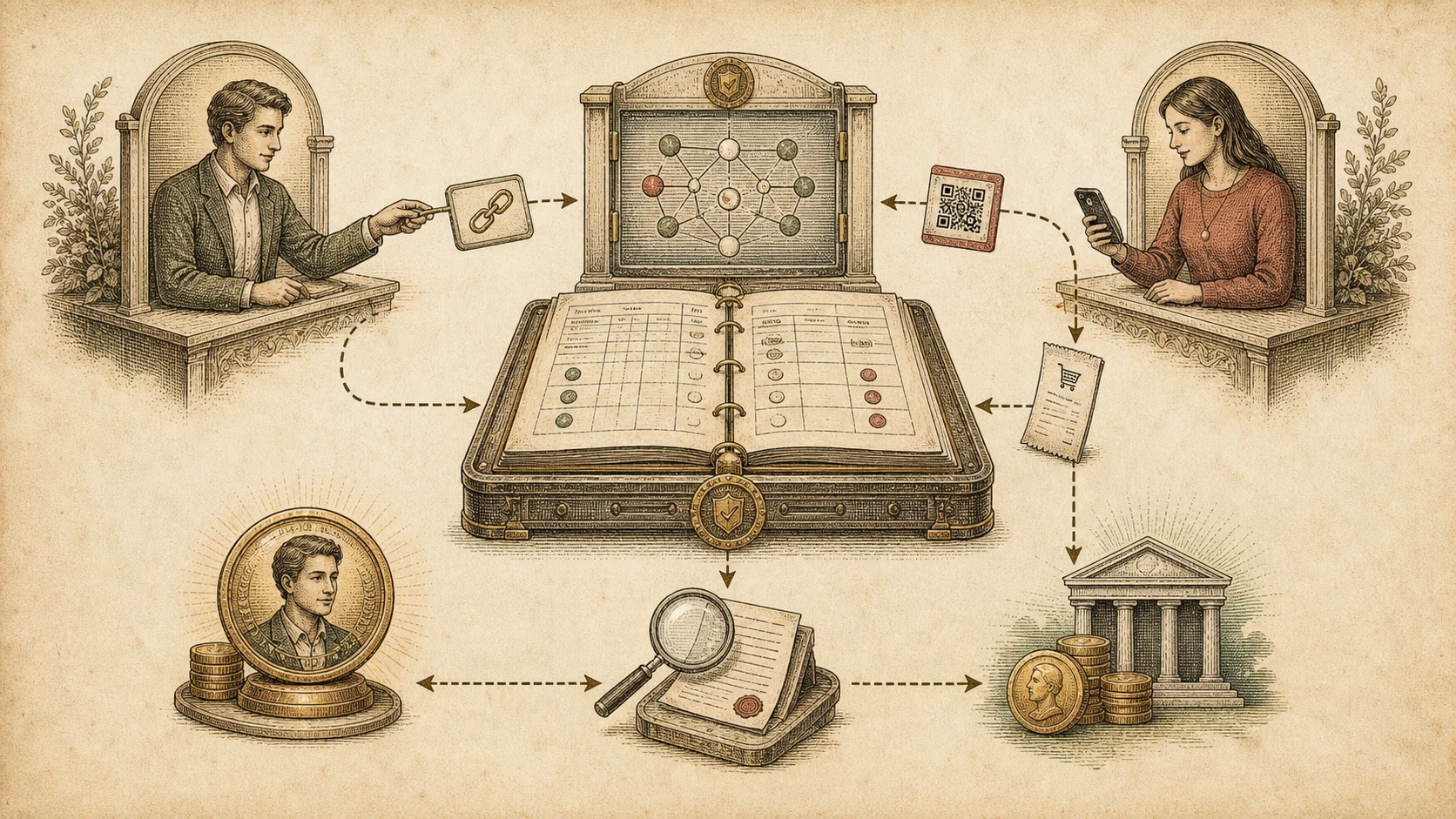
Real-time feedback is a business feature.
Small, timely signals keep a partner engaged long before payout day. A link opened means someone followed the recommendation. A purchase started means the traffic has real intent. A payment completed means the referral became revenue. A commission approved means the host accepted the reward. A payout sent means the commercial promise was fulfilled.
None of these signals has to be loud. The point is not to turn the partner dashboard into a slot machine. The point is to remove doubt while the relationship is still warm. Quiet proof beats loud encouragement almost every time.
The more paid products a partner sells, the better future rewards become.

A commission ladder turns referrals into a progression. Partners keep selling after the first win, and the host rewards proven partners without negotiating every case. This is useful because "let's discuss your rate again" is a terrible operating system.
The table below is a starting shape, not a benchmark. Tune the percentages and thresholds to your margins, average order value, refund profile, and acquisition cost. The point is the shape, not the exact rungs.
| Tier | Qualified paid products | Future commission | Partner message |
|---|---|---|---|
| Starter | 0 to 9 | 8% | Prove the channel. |
| Builder | 10 to 24 | 10% | You are now a reliable source. |
| Rainmaker | 25 to 49 | 12% | Your referrals are part of growth planning. |
| Partner | 50+ | 15% | You are a strategic partner. |
A starting template, not settled policy. Re-check the rates against real margin and customer acquisition cost before you publish them.
Count paid products, not empty traffic. Apply better rates forward when a partner reaches a new tier, so payout history stays clean. Make the gap visible: two more paid products to reach the next level is more motivating than a monthly PDF.
The operating rhythm
Daily work is about exceptions: new paid referrals, blocked commissions, partner questions, and anything that could turn into a trust problem.
Weekly work is about pattern recognition: partner performance, inactive links, tier movement, payout risk, and the partners who should be coached or promoted.
Monthly work is about settlement: approve commissions, send payouts, review margins, and decide whether the reward ladder still makes sense for the business. The rhythm is not glamorous, which is usually how you know it might actually work.
What to measure
Activation tells you how many partners ever share their link or QR code. Low activation usually points at the toolkit or onboarding, not the partners.
Conversion tells you which partners create paid customers, not just traffic. Traffic without sales burns trust and hides who is worth rewarding. Quality tells you whether those sales create refund, cancellation, chargeback, or support risk.
Velocity tells you how fast partners reach the next tier. A fast start that stalls usually means a lucky win, not a repeatable channel. Margin tells you whether each commission level still makes sense after refunds, fees, and support load.
Trust is the metric to watch first. Count how often partners ask for manual proof, a screenshot, or payout clarification. Every such message is a partner who no longer believes the dashboard and a future dispute that will cost you a relationship. When this number rises, the program is already breaking, even if revenue still looks fine. Revenue can smile while trust is quietly packing its bags.
What the build actually entails
This is the part that separates a program that runs itself from one that collapses into email threads. These are the engineering decisions that make the trust engine hold up under real traffic, real refunds, and real people asking very fair questions at very inconvenient times.
Attribution model. Every referral begins with one honest question: who gets credit? Last-click attribution rewards whoever closed the sale, which is fair to the partner who converted intent into revenue. First-click rewards whoever started the relationship, which is fair to the partner who created the lead. In practice most programs pick last-click for simplicity and accept that it under-credits early introducers, then revisit the choice once they have enough data to argue about it. The wrong move is to leave it undefined and resolve every disputed commission by hand. That is not flexibility. That is a future inbox problem wearing a nice shirt.
Anti-gaming and fraud checks. A referral link is a budget other people can spend, so the system has to watch how it is spent. Self-referrals, repeat clicks from one device, sudden spikes far above a partner's history, and orders that refund the day after payout are all patterns worth flagging for review rather than auto-approving. The goal is not to treat partners as suspects, it is to keep the honest majority confident that the program cannot be gamed around them. Good controls protect the relationship instead of making everyone feel like they walked into airport security.
Idempotent payouts. Money must move exactly once. Every payout needs a stable idempotency key so that a retried job, a redeployed worker, or a duplicate webhook never pays the same commission twice. Without that guarantee, reliability work becomes a choice between under-paying partners and over-paying them, and either one erodes the trust the program exists to build.
Webhook reliability for "payment completed". The moment a purchase becomes revenue is the moment the partner's world should update, but that signal arrives over webhooks, which fail, arrive late, and arrive more than once. Treat the payment provider's webhook as a hint, reconcile against the provider's API on a schedule, and make the commission ledger the source of truth rather than the webhook stream. Partners notice the gap between "the customer paid" and "my dashboard moved", and a slow gap reads as doubt even when nothing is wrong. The system may be fine, but the partner cannot see "fine" from their side of the glass.
One data model, three views. The customer, partner, and host views are not three systems, they are three projections of the same ledger. A referral record links a partner to a customer's purchase, and every screen is a different permissioned read of that same record. Built this way, a cancellation, a reversal, or a tier change propagates everywhere at once, and no view can drift out of agreement with the others. That single source of truth is what makes "the customer gets clarity, the partner gets credit, the host gets control" technically possible rather than a slogan, and it is why Trust is the metric to watch before revenue: a referral program is a reputational loan, and once the ledger and the dashboard stop agreeing, the loan is already being defaulted on.